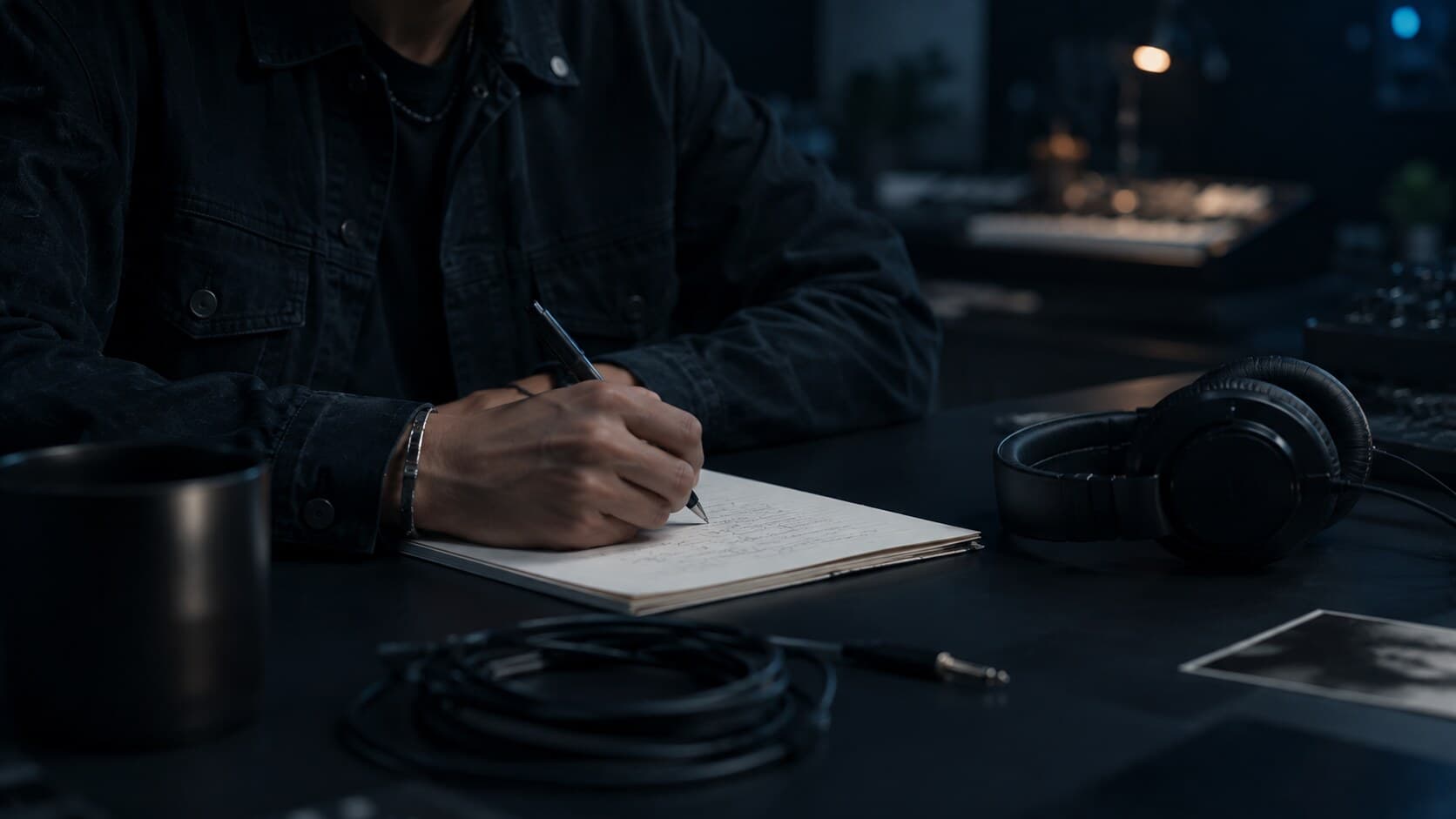
Where It Stops
Where the generated sound stops, and where the record begins.
Some worlds run on a logic so real it sounds like a lie.
glassh(our) is one of them. The five are not real. That is not hidden. The lie is put on the table first.
A lie that runs on real logic stops being a lie. The logic is only one thing: what was kept, and what was cut.
Some of the audio came from generative tools. That is not hidden either. But the record does not begin at the moment of generation. It begins in the hundreds of almost-right sounds heard and left closed, in the parts the tool filled and cut back out by hand, in the guitar moved two bars later because the song was not ready to look back yet.
Even the material that sounds most fake becomes real once it passes through a hand that knows where to stop. It becomes a song only when a name, a voice, and an order of refusals are laid over it.
Abundance is no longer impressive. In an age that fills endlessly, only one thing remains: what was set in front of the world.
The next step is clearer. The machine moves from collaborator back to instrument. Lyrics, composition, arrangement, performance, programming return to the human hand. AI stays only at the final vocal: a tool that renders a voice already written and placed.
Not a hidden singer. Not a replacement band. One instrument at the mouth of a fictional body.
The work is not to make the machine disappear. The work is to know where it stops.
The more a world sounds like a lie, the more exact its logic has to be.